

Guide (New 2021) Actual Microsoft AZ-700 Exam Questions
AZ-700 Exam Dumps Pass with Updated 2021 Certified Exam Questions
Skills measured
- Design, Implement, and Manage Hybrid Networking (10% to 15%)
- Design and Implement Core Networking Infrastructure (20% to 25%)
- Design and Implement Routing (25% to 30%)
- Design and Implement Private Access to Azure Services (10% to 15%)
- Secure and Monitor Networks (15% to 20%)
Exam AZ-700: Designing and Implementing Microsoft Azure Networking Solutions (beta)
Candidates for this exam should have subject matter expertise in planning, implementing, and maintaining Azure networking solutions, including hybrid networking, connectivity, routing, security, and private access to Azure services.
Candidates for this exam should also have expert Azure administration skills, in addition to extensive experience and knowledge of networking, hybrid connections, and network security.
Beta exams are not scored immediately because we are gathering data on the quality of the questions and the exam. Learn more about the value and importance of beta exams.
Part of the requirements for: Microsoft Certified: Azure Network Engineer Associate
NEW QUESTION 42
You need to implement a P2S VPN for the users in the branch office. The solution must meet the hybrid networking requirements.
What should you do? To answer, select the appropriate options in the answer area.
NOTE: Each correct selection is worth one point.
Answer:
Explanation: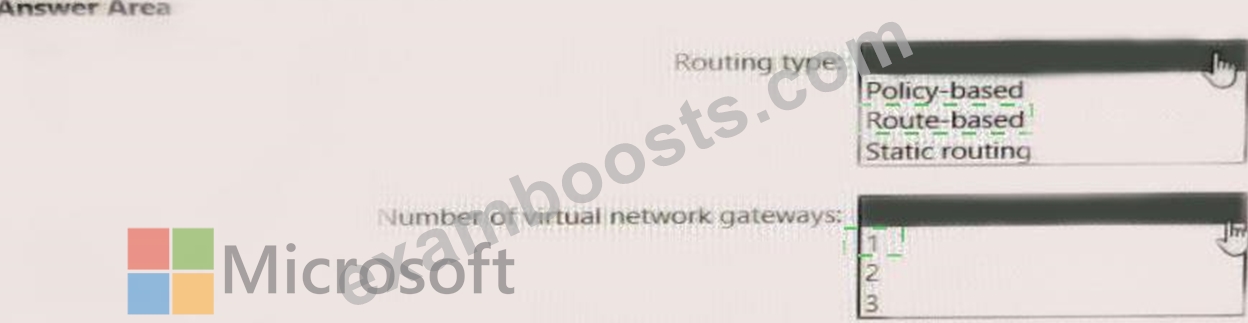
NEW QUESTION 43
Your company has 10 instances of a web service. Each instance is hosted in a different Azure region and is accessible through a public endpoint.
The development department at the company is creating an application named App1. Every 10 minutes. App1 will use a list of end points and connect to the first available endpoint.
You plan to use Azure Traffic Manager to maintain the list of endpoints.
You need to configure a Traffic Manager profile that will minimize the impact of DNS caching.
What should you configure? To answer, select the appropriate options in the answer area.
NOTE: Each correct selection is worth one point.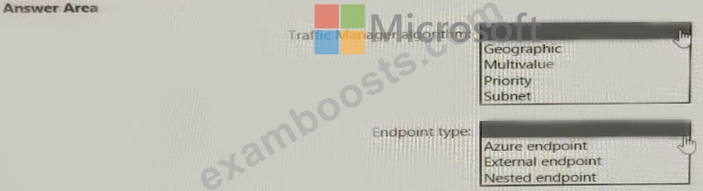
Answer:
Explanation: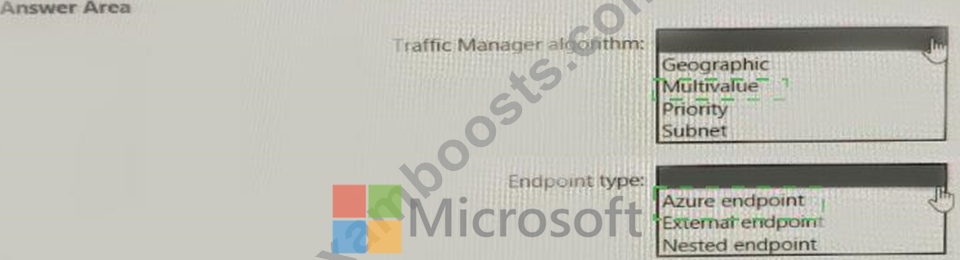
NEW QUESTION 44
You have an Azure subscription that is linked to an Azure Active Directory (Azure AD) tenant named contoso.onmicrosoft.com. The subscription contains the following resources:
* An Azure App Service app named App1
* An Azure DNS zone named contoso.com
* An Azure private DNS zone named private.contoso.com
* A virtual network named Vnet1
You create a private endpoint for App1. The record for the endpoint is registered automatically in Azure DNS.
You need to provide a developer with the name that is registered in Azure DNS for the private endpoint.
What should you provide?
- A. app1.private.contoso.com
- B. app1.privatelink.azurewebsites.net
- C. app1.contoso.com
- D. app1.contoso.onmicrosoft.com
Answer: B
NEW QUESTION 45
You need to configure GW1 to meet the network security requirements for the P2S VPN users.
Which Tunnel type should you select in the Point-to-site configuration settings of GW1?
- A. IKEv2 and SSTP (SSL)
- B. IKEv2
- C. SSTP (SSL)
- D. OpenVPN (SSL)
Answer: C
Explanation:
Reference:
https://docs.microsoft.com/en-us/azure/vpn-gateway/openvpn-azure-ad-tenant
NEW QUESTION 46
You are planning an Azure solution that will contain the following types of resources in a single Azure region:
* Virtual machine
* Azure App Service
* Virtual Network gateway
* Azure SQL Managed Instance
App Service and SQL Managed Instance will be delegated to create resources in virtual networks.
You need to identify how many virtual networks and subnets are required for the solution. The solution must minimize costs to transfer data between virtual networks.
What should you identify? To answer, select the appropriate options in the answer area.
NOTE: Each correct selection is worth one point.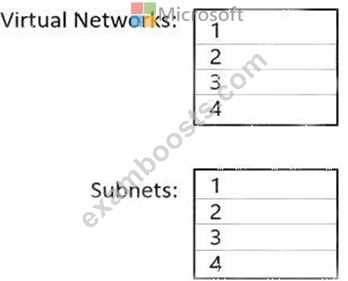
Answer:
Explanation: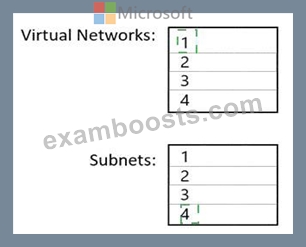
Explanation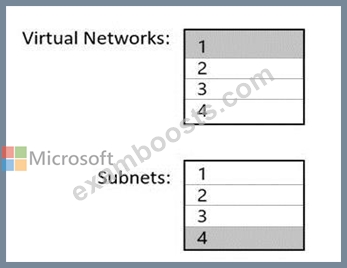
Diagram, table Description automatically generated
Reference:
https://docs.microsoft.com/en-us/azure/virtual-network/virtual-network-for-azure-services#services-that-can-be-d
NEW QUESTION 47
You need to meet the network security requirements for the NSG flow logs.
Which type of resource do you need, and how many instances should you create? To answer, select the appropriate options in the answer area.
NOTE: Each correct selection is worth one point.
Answer:
Explanation:
NEW QUESTION 48
You have an Azure Front Door instance named FrontDoor1.
You deploy two instances of an Azure web app to different Azure regions.
You plan to provide access to the web app through FrontDoor1 by using the name app1.contoso.com.
You need to ensure that FrontDoor1 is the entry point for requests that use app1.contoso.com.
Which three actions should you perform in sequence? To answer, move the appropriate actions from the list of actions to the answer area and arrange them in the correct order.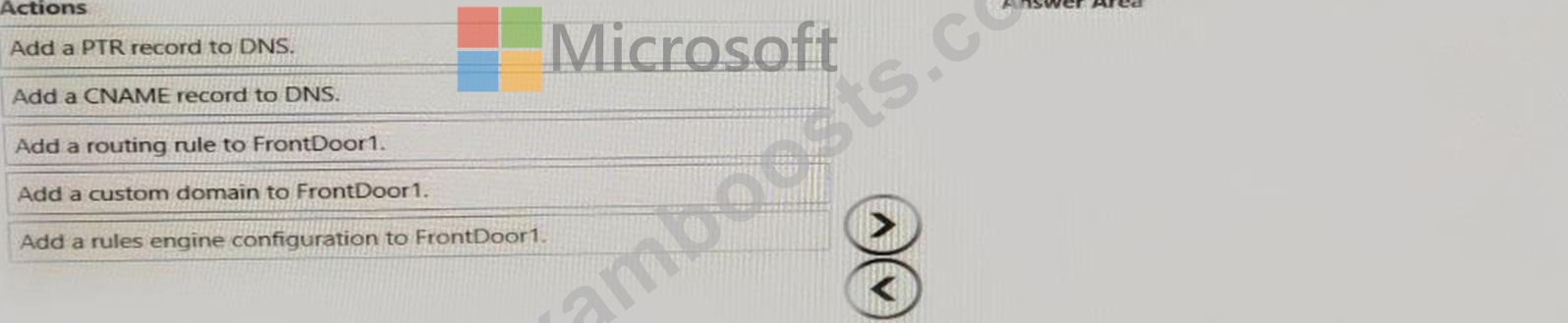
Answer:
Explanation: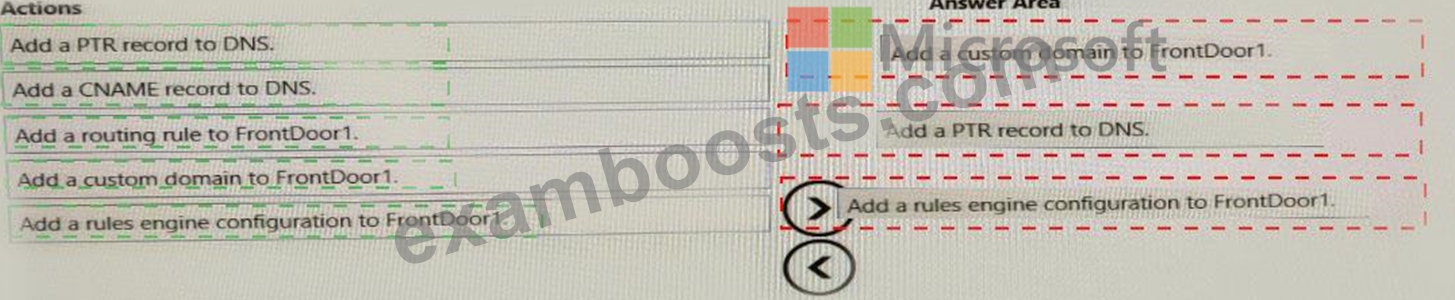
NEW QUESTION 49
What should you implement to meet the virtual network requirements for the virtual machines that connect to Vnet4 and Vnet5?
- A. a routing table
- B. a service endpoint
- C. a private link service
- D. a virtual network peering
- E. a private endpoint
Answer: D
Explanation:
Explanation
There is no virtual network peering between VM4's VNet (VNet3) and VM5's VNet (VNet4). To enable the VMs to communicate over the Microsoft backbone network a VNet peering is required between VNet3 and VNet4.
NEW QUESTION 50
You have five virtual machines that run Windows Server. Each virtual machine hosts a different web app.
You plan to use an Azure application gateway to provide access to each web app by using a hostname of www.contoso.corn and a different URL path for each web app, for example: https://www.contoso.com/app1.
You need to control the flow of traffic based on the URL path.
What should you configure?
- A. listeners
- B. rules
- C. HTTP settings
- D. rewrites
Answer: B
Explanation:
Reference:
https://docs.microsoft.com/en-us/azure/application-gateway/url-route-overview
NEW QUESTION 51
You are configuring two network virtual appliances (NVAs) in an Azure virtual network. The NVAs will be used to inspect all the traffic within the virtual network.
You need to provide high availability for the NVAs. The solution must minimize administrative effort. What should you include in the solution?
- A. Azure Application Gateway
- B. Azure Standard Load Balancer
- C. Azure Front Door
- D. Azure Traffic Manager
Answer: B
Explanation:
Reference:
https://docs.microsoft.com/en-us/azure/architecture/reference-architectures/dmz/nva-ha?tabs=cli
NEW QUESTION 52
You create NSG10 and NSG11 to meet the network security requirements.
For each of the following statements, select Yes it the statement is true. Otherwise, select No.
NOTE: Each correct selection is worth one point.
Answer:
Explanation:
NEW QUESTION 53
You have an Azure subscription that contains the following resources:
* A virtual network named Vnet1
* Two subnets named subnet1 and AzureFirewallSubnet
* A public Azure Firewall named FW1
* A route table named RT1 that is associated to Subnet1
* A rule routing of 0.0.0.0/0 to FW1 in RT1
After deploying 10 servers that run Windows Server to Subnet1, you discover that none of the virtual machines were activated.
You need to ensure that the virtual machines can be activated.
What should you do?
- A. On FW1, create an outbound service tag rule for AzureCloud.
- B. On FW1, create an outbound network rule that allows traffic to the Azure Key Management Service (KMS).
- C. Deploy a NAT gateway.
- D. To Subnetl, associate a network security group (NSG) that allows outbound access to port 1688.
Answer: B
Explanation:
Reference:
https://ryanmangansitblog.com/2020/05/11/firewall-considerations-windows-virtual-desktop-wvd/
NEW QUESTION 54
You have the hybrid network shown in the Network Diagram exhibit.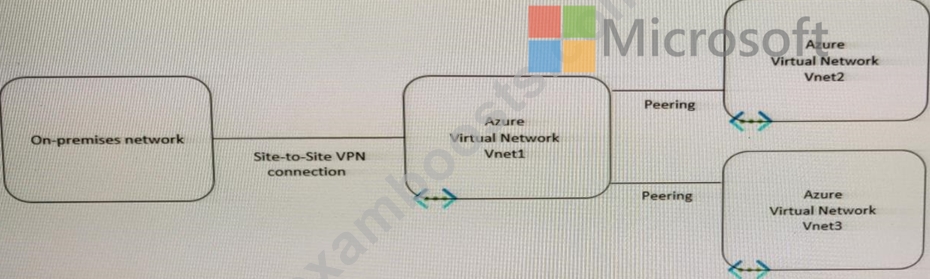
You have a peering connection between Vnet1 and Vnet2 as shown in the Peering-Vnet1-Vnet2 exhibit.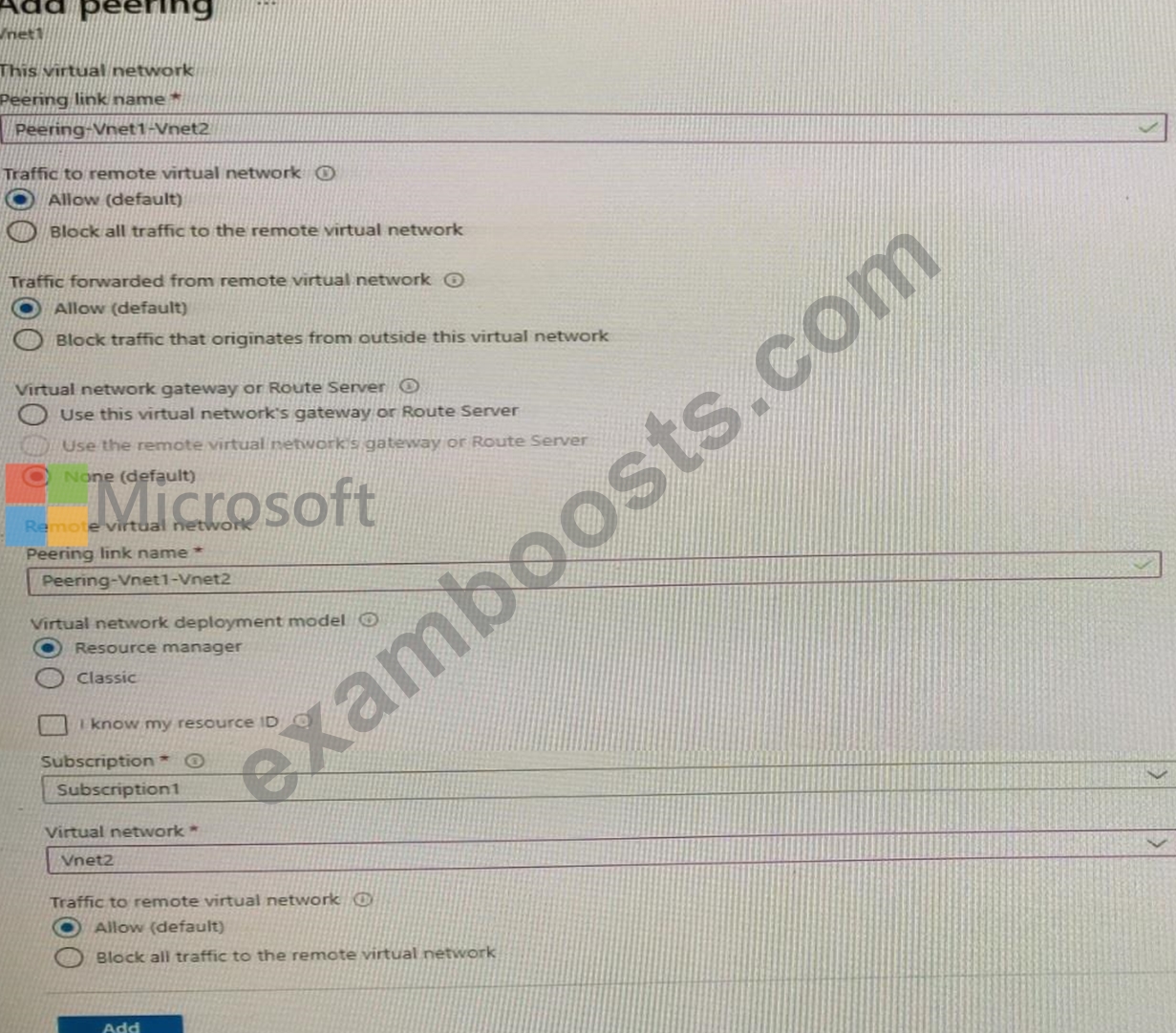
You have a peering connection between Vnet1 and Vnet3 as shown in the Peering -Vnet1-Vnet3 exhibit.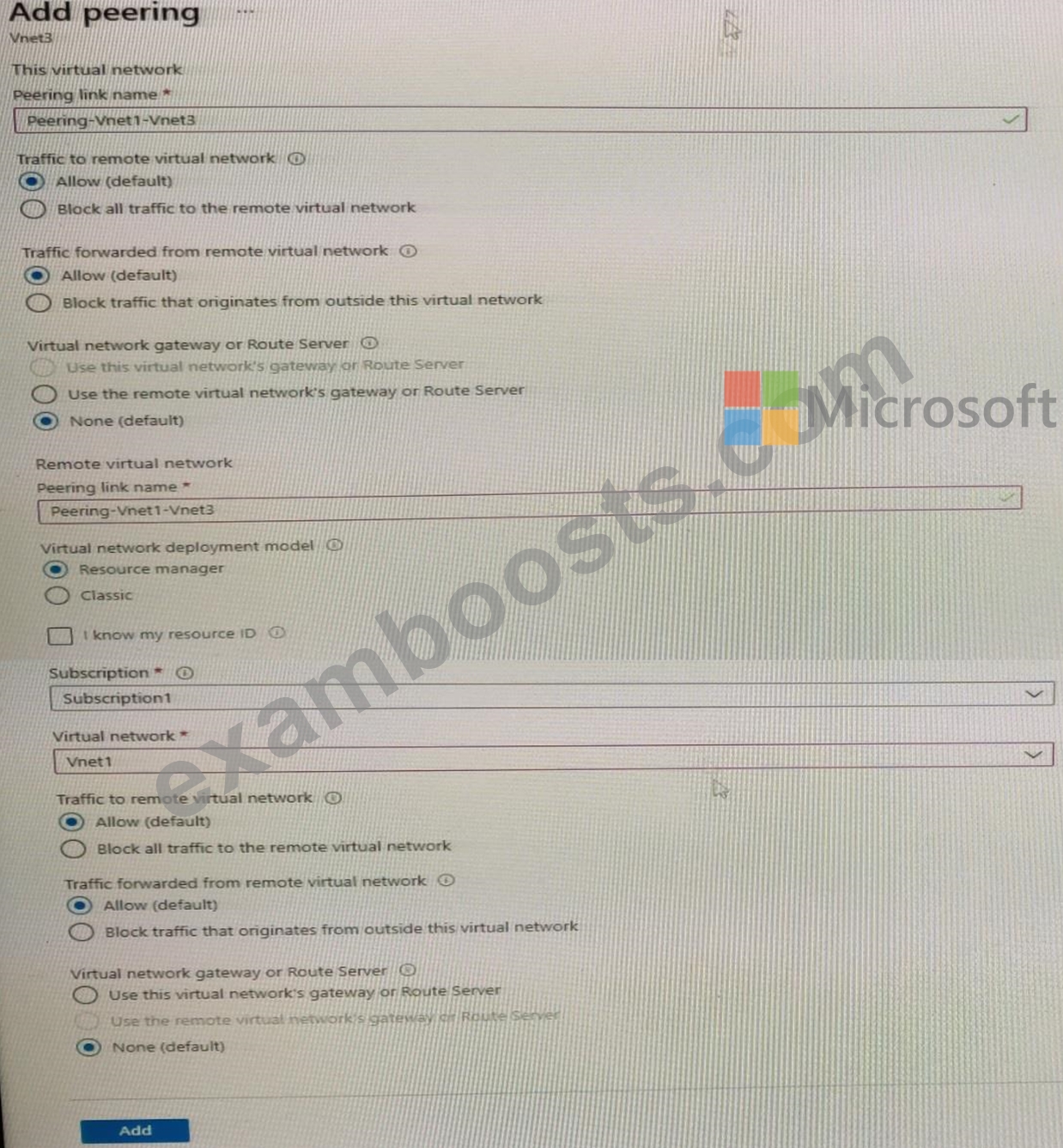
For each of the following statements, select Yes if the statement is true. Otherwise, select No.
NOTE: Each correct selection is worth one point.
Answer:
Explanation:
NEW QUESTION 55
You have an Azure Web Application Firewall (WAF) policy in prevention mode that is associated to an Azure Front Door instance.
You need to configure the policy to meet the following requirements:
* Log all connections from Australia.
* Deny all connections from New Zealand.
* Deny all further connections from a network of 131.107.100.0/24 if there are more than 100 connections during one minute.
What is the minimum number of objects you should create?
- A. one rule that has two conditions and another rule that has one condition
- B. three custom rules that each has one condition
- C. one custom rule that has one condition
- D. one custom rule that has three conditions
Answer: B
Explanation:
Reference:
https://docs.microsoft.com/en-us/azure/web-application-firewall/afds/afds-overview
NEW QUESTION 56
You have an Azure application gateway for a web app named App1. The application gateway allows end-to-end encryption.
You configure the listener for HTTPS by uploading an enterprise signed certificate.
You need to ensure that the application gateway can provide end-to-end encryption for App1. What should you do?
- A. Upload the public key certificate to the HTTP settings.
- B. Increase the Unhealthy threshold setting in the custom probe.
- C. Enable the SSL profile for the listener.
- D. Set Listener type to Multi site.
Answer: A
Explanation:
Reference:
https://docs.microsoft.com/en-us/azure/application-gateway/end-to-end-ssl-portal
NEW QUESTION 57
You have an Azure subscription that contains multiple virtual machines in the West US Azure region.
You need to use Traffic Analytics.
Which two resources should you create? Each correct answer presents part of the solution. (Choose two.) NOTE: Each correct answer selection is worth one point.
- A. a Log Analytics workspace C a storage account
- B. an Azure Monitor workbook
- C. an Azure Monitor data collection rule
- D. an Azure Sentinel workspace
Answer: A,D
Explanation:
Reference:
https://docs.microsoft.com/en-us/azure/network-watcher/traffic-analytics
NEW QUESTION 58
You have an Azure virtual network that contains the subnets shown in the following table.
You deploy an Azure firewall to AzureFirewallSubnet. You route all traffic from Subnet2 through the firewall.
You need to ensure that all the hosts on Subnet2 can access an external site located at https://*.contoso.com.
What should you do?
- A. In a firewall policy, create a DNAT rule.
- B. Create a network security group (NSG) and associate the NSG to Subnet2.
- C. In a firewall policy, create a network rule.
- D. In a firewall policy, create an application rule.
Answer: B
NEW QUESTION 59
You have three on-premises sites. Each site has a third-party VPN device.
You have an Azure virtual WAN named VWAN1 that has a hub named Hub1. Hub1 connects two of the three on-premises sites by using a Site-to-Site VPN connection.
You need to connect the third site to the other two sites by using Hub1.
Which four actions should you perform in sequence? To answer, move the appropriate actions from the list of actions to the answer area and arrange them in the correct order.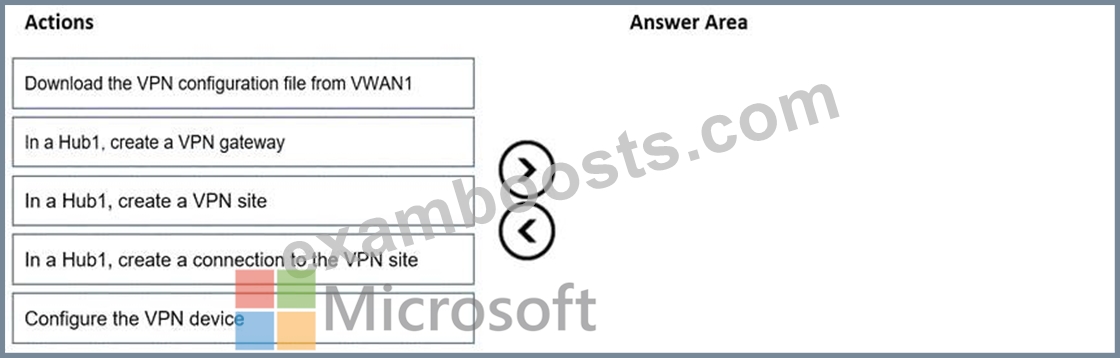
Answer:
Explanation: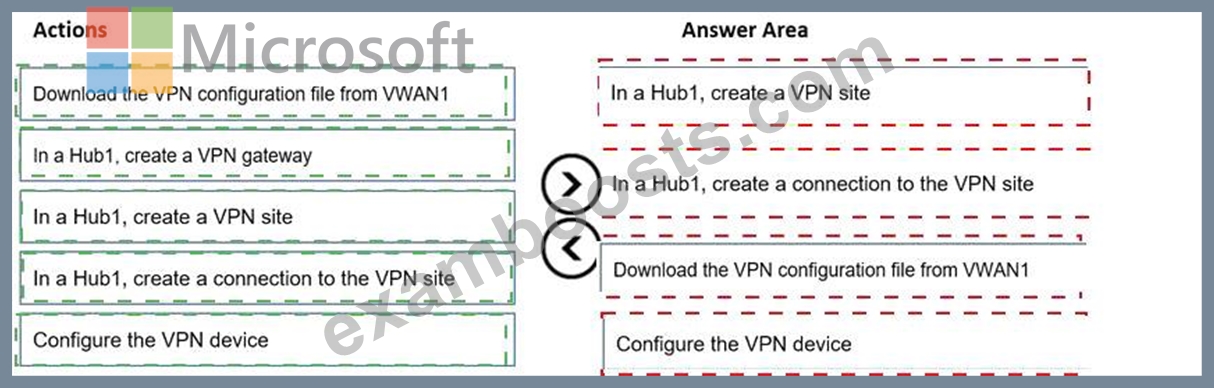
Explanation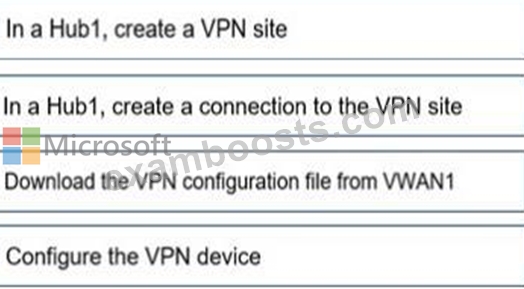
Table Description automatically generated
Reference:
https://docs.microsoft.com/en-us/azure/virtual-wan/virtual-wan-site-to-site-portal
NEW QUESTION 60
You have an Azure application gateway for a web app named App1. The application gateway allows end-to-end encryption.
You configure the listener for HTTPS by uploading an enterprise signed certificate.
You need to ensure that the application gateway can provide end-to-end encryption for App1. What should you do?
- A. Increase the Unhealthy threshold setting in the custom probe.
- B. Enable the SSL profile for the listener.
- C. Upload the public key certificate to the HTTP settings.
- D. Set Listener type to Multi site.
Answer: B
NEW QUESTION 61
For each of the following statements, select Yes if the statement is true. Otherwise, select No.
NOTE: Each correct selection is worth one point.
Answer:
Explanation:
NEW QUESTION 62
You need to prepare Vnet1 for the deployment of an ExpressRoute gateway. The solution must meet the hybrid connectivity requirements and the business requirements.
Which three actions should you perform in sequence for Vnet1? To answer, move the appropriate actions from the list of actions to the answer area and arrange them in the correct order.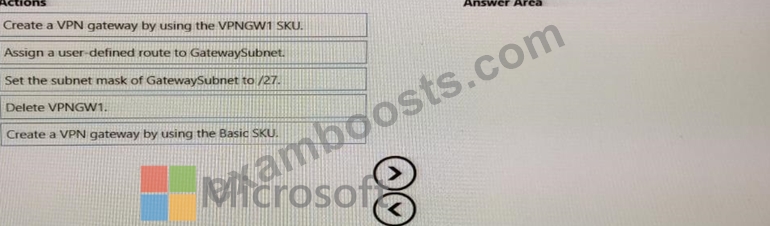
Answer:
Explanation:
NEW QUESTION 63
Note: This question is part of a series of questions that present the same scenario. Each question in the series contains a unique solution that might meet the stated goals. Some question sets might have more than one correct solution, while others might not have a correct solution.
After you answer a question in this section, you will NOT be able to return to it. As a result, these questions will not appear in the review screen.
You have an Azure application gateway that has Azure Web Application Firewall (WAF) enabled.
You configure the application gateway to direct traffic to the URL of the application gateway.
You attempt to access the URL and receive an HTTP 403 error. You view the diagnostics log and discover the following error.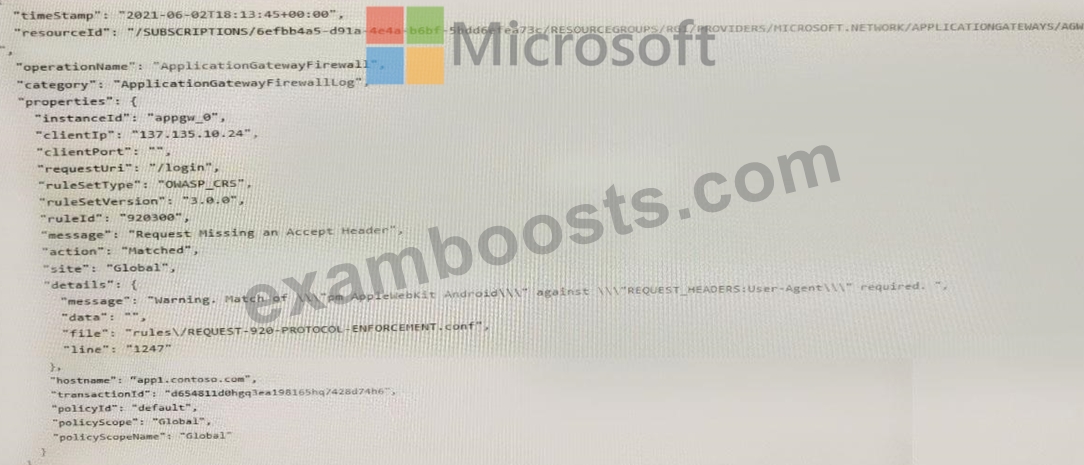
You need to ensure that the URL is accessible through the application gateway.
Solution: You create a WAF policy exclusion request headers that contain 137.135.10.24.
Does this meet the goat?
- A. No
- B. Yes
Answer: A
NEW QUESTION 64
You have an Azure virtual network named Vnet1.
You need to ensure that the virtual machines in Vnet1 can access only the Azure SQL resources in the East US Azure region. The virtual machines must be prevented from accessing any Azure Storage resources.
Which two outbound network security group (NSG) rules should you create? Each correct answer presents part of the solution.
NOTE: Each correct selection is worth one point.
- A. a deny rule that has a source of VirtualNetwork and a destination of 168.63.129.0/24
- B. a deny rule that has the IP address range of Vnet1 as the source and destination of Storage
- C. a deny rule that has a source of VirtualNetwork and a destination of Sql
- D. an allow rule that has the IP address range of Vnet1 as the source and destination of Sql.EastUS
Answer: A,B
NEW QUESTION 65
You need to implement outbound connectivity for VMScaleSet1. The solution must meet the virtual networking requirements and the business requirements.
Which three actions should you perform in sequence? To answer, move the appropriate actions from the list of actions to the answer area and arrange them in the correct order.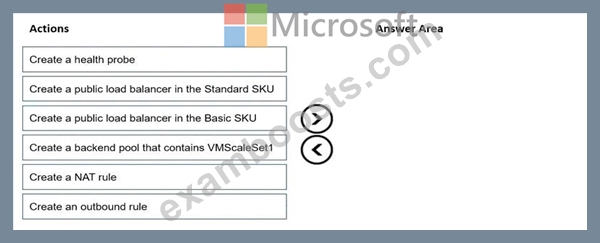
Answer:
Explanation: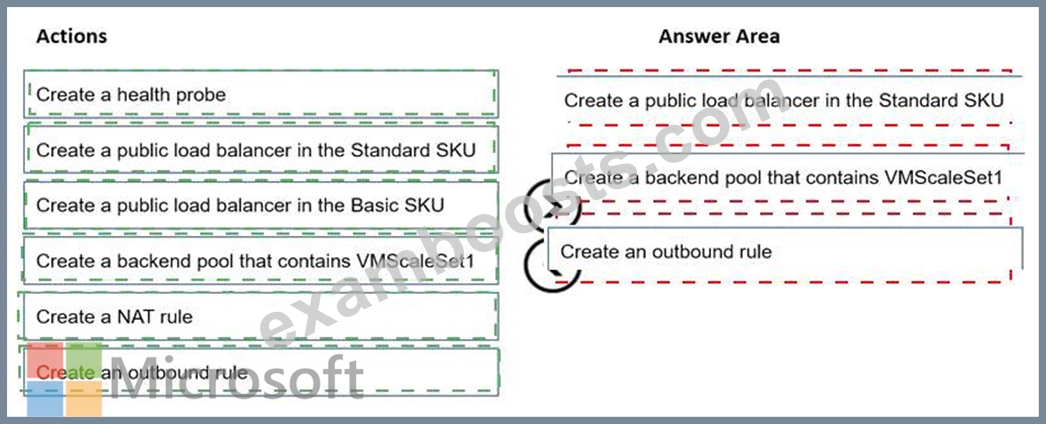
Explanation
Graphical user interface, text, application Description automatically generated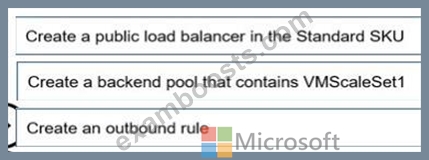
Reference:
https://docs.microsoft.com/en-us/azure/load-balancer/skus
https://docs.microsoft.com/en-us/azure/load-balancer/load-balancer-outbound-connections#outboundrules
NEW QUESTION 66
You have an Azure subscription that contains the public IP addresses shown in the following table.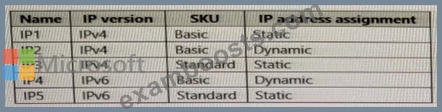
You plan to deploy a NAT gateway named NAT1.
Which public IP addresses can be used as the public IP address for NAT1?
- A. IP5 only
- B. IP1, IP3, and IP5 only
- C. IP3 and IP5 only
- D. IP3 only
- E. IP2 and IP4 only
Answer: D
Explanation:
Explanation
Only static IPv4 addresses in the Standard SKU are supported. IPv6 doesn't support NAT.
Reference:
https://docs.microsoft.com/en-us/azure/virtual-network/nat-gateway/nat-overview
NEW QUESTION 67
......
Pass Guaranteed Quiz 2021 Realistic Verified Free Microsoft: https://www.examboosts.com/Microsoft/AZ-700-practice-exam-dumps.html
AZ-700 Exam Questions - Real & Updated Questions PDF: https://drive.google.com/open?id=1rE_dyCW09sUhVYAlyWxUoM-N0Dk6XIAh